
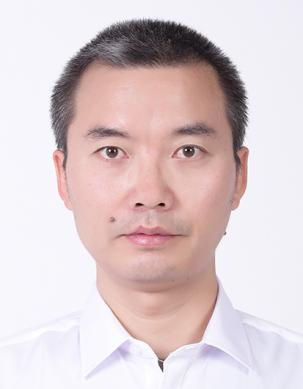
 | Prof. Zelin TongHainan University, ChinaExperience: Currently serving as Vice Dean of the International Business School, Hainan University, and Director of the Executive Development Program (EDP) Center; also Professor, Doctoral Supervisor, and head of the Business Environment and Brand Management Research Team at Hainan University. Ph.D. degree obtained from Wuhan University in 2012. Visiting Scholar at Guanghua School of Management, Peking University from 2015 to 2016, and Visiting Scholar at the College of Business, City University of Hong Kong from January to June 2020. Main research interests include brand marketing and social responsibility management, innovation and entrepreneurship and leadership, and free trade port policies. Principal investigator of three projects funded by the National Natural Science Foundation of China (NSFC) and two provincial-level research projects. More than 50 papers published as first or corresponding author in journals including Management World, Nankai Business Review, Acta Psychologica Sinica, International Journal of Hospitality Management, International Marketing Review, and Journal of Product and Brand Management. Selected as a Young Top Talent at North China University of Technology in 2016; selected as a Young Top Talent under the High-level Faculty Development Support Program for Beijing Municipal Universities in 2017; selected for the Hainan Provincial Top Talent Program in 2019; and selected into the third level of the Hainan “515 Project” Talent Program in 2020. Speech Title: Moral Marketing from the Perspective of Chinese Culture: A Series of Studies Abstract: From the perspective of China's differential mode of association (chaxu geju) culture, this study examines the effects, underlying mechanisms, and managerial implications of moral marketing activities on consumers' brand evaluations, focusing respectively on entrepreneurs' morality, corporate charitable donations, and corporate cross-border philanthropic behavior |
 | Prof. Youlu ShenHainan Normal University, ChinaExperience: Shen Youlu is a postdoctoral researcher in the economics of education, and a Third-Grade Professor and doctoral supervisor at Hainan Normal University, where he serves as the Chief Expert for the development of the doctoral program in School Education. He has been selected as a Hainan Provincial Leading Talent, a Hainan "South China Sea Distinguished Scholar," and a second-level candidate in the Hainan "515 Talent Project," and has been included in China's Most Influential Scholars in Philosophy and Social Sciences (Education) Ranking (2020 Edition) as well as among the top 1% of highly cited scholars on CNKI. 2008, and completed his postdoctoral research at the Postdoctoral Research Station in Education, Central China Normal University, in September 2011. He concurrently serves as Executive Council Member of the Education Economics Branch of the Chinese Society of Education, Deputy Director/Executive Council Member of the Academic Committee of the Modern Educational Management Professional Committee of the Chinese Society for Educational Development Strategy, and Editorial Board Member of Vocational and Technical Education (a reprint journal of Renmin University of China's Copied Newspaper and Periodical Materials), among other positions. He has published 97 papers in national Chinese core journals, including Educational Research (教育研究), 19 of which have been fully reprinted by Xinhua Abstracts and Renmin University of China Copied Newspaper and Periodical Materials. His publications have been cited 1,945 times in total, with an average of 12.01 citations per paper. He has won three first prizes, four second prizes, and two third prizes for outstanding achievements in provincial social sciences. He has led and completed two National Social Science Fund projects, as well as projects funded by the China Postdoctoral Science Foundation (Special Grant and General Grant), the Ministry of Education's Humanities and Social Sciences Research Fund, and others. Four of his policy advisory reports have received affirmative written instructions from provincial and ministerial-level principal leaders. He has published six monographs with People's Publishing House and other publishers. He is a member of the expert review panels for national and provincial/ministerial-level research foundation projects, and a peer reviewer for multiple C-journals (CSSCI journals). He received his Ph.D. in Education Economics and Management (a national key discipline) from the School of Education, Beijing Normal University, in June Speech Title: Mobility Intention of Primary and Secondary School Teachers: Moving to Urban Areas, Rural Areas, or Quitting the Teaching Profession — Evidence from a National Survey of 15,383 Teachers Abstract: With continuous improvement in educational facilities, educational investments should be more inclined toward teachers, and teacher benefits should be progressively enhanced. To enable teachers to teach with peace and enthusiasm, to take root in the education profession, and to achieve retention, effective teaching, and career development. Through the survey of 15,383 primary and secondary school teachers nationwide, we found that there exhibit a dual trend of both upward and downward career transitions for the mobility intentions of primary and secondary school teachers. Those who want to remain teaching in the schools accounts for 70.86% of the total teachers, 13.00% of the teachers want to move to teach in urban areas (including county towns), 6.25% of the teachers want to move to teach in rural areas (including townships), and 9.88% of the teachers want to leave the teaching profession. There exists a significant differences of the mobility intention of primary and secondary school teachers among different demographic variables such as educational stage, region, urban-rural status, gender, marital status, age, subject, professional title, and income, etc. Teachers in western regions, male teachers, unmarried and childless teachers, teachers without class advisors or administrative positions, teachers aged 26-30, teachers with junior professional titles, and teachers with annual post-tax salaries of 30,000 yuan or less exhibit the lowest retention willingness, while showing the highest intentions to relocate to urban areas and leave teaching positions. Rural teachers exhibit the lowest retention willingness and the highest intention to migrate to urban areas, teachers in central region showing the highest willingness for urban migration among , while teachers in county towns exhibit the strongest inclination to return to rural areas. Salary and career development are the most core influencing factors that determine teachers' mobility intention. It is necessary to further improve the salary and benefits of primary and secondary school teachers, with particular emphasis on accelerating income growth for young teachers, reducing their work pressure, and facilitating their career advancement pathways for professional titles. Increase the proportion of mid-to-senior professional titles, focus on female teachers and teachers in western regions, enhance living allowances for rural teachers, and encourage more teachers to migrate to rural areas and under-resourced schools. This approach can enhance the retention willingness of primary and secondary school teachers, thereby reducing their tendency to migrate to urban areas or resign from teaching positions. |
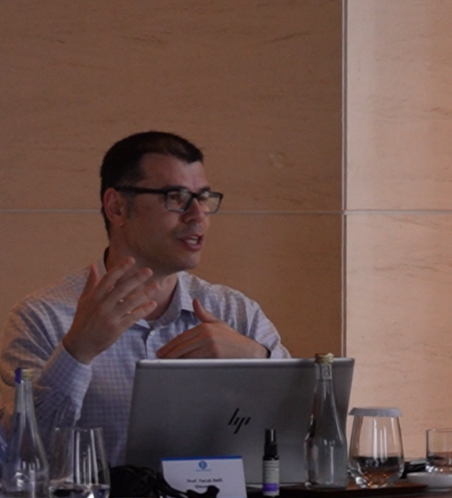 | Prof. Faruk BalliMasseyUniversity, New ZealandExperience: Professor Dr Faruk Balli is Professor of Economics and Finance in the School of Accountancy, Economics and Finance at Massey University, New Zealand. He holds a PhD in Economics from the University of Houston and has previously worked as a research economist at the Qatar Central Bank and as an assistant professor at the University of Dubai. He has also served as a consultant to the World Bank and Bank Indonesia. Professor Balli’s research lies at the intersection of international macroeconomics, international finance, financial economics, Islamic finance, and tourism economics. His work examines international risk sharing, financial integration, portfolio allocation, asset-price volatility, market connectedness, geopolitical and economic uncertainty, corporate payout policy, Sukuk and Islamic equity markets, and tourism demand. His research has appeared in leading journals, including the Journal of Banking and Finance, Energy Economics, Tourism Management, Journal of International Money and Finance, Regional Studies, World Economy. His recent studies have examined spillovers between Islamic and conventional financial markets, green bonds, commodities, cryptocurrencies, energy markets, and tourism-related assets. Professor Balli is also an experienced doctoral supervisor, academic editor, journal referee, and policy consultant. His Google Scholar profile records more than 5,600 citations, with an h-index of 43, reflecting the broad international influence of his research. He has supervised doctoral research in international finance, Islamic finance, corporate finance, financial-market uncertainty, housing markets, and commodity-market risk. Overall, his scholarship combines rigorous applied econometric methods with important questions in global finance, risk transmission, and economic policy Title: Payout Smoothing Policies and Income Growth Evidence from Sharia-Compliant Firms Abstract: This study examines payout smoothing behavior among Sharia-compliant (SC) firms relative to their non-Sharia-compliant (NSC) counterparts. In the first stage, we analyze how payout growth responds to short-term net income shocks. The findings show that, overall, payout growth is largely insulated from year-to-year earnings fluctuations. However, for SC firms—particularly following their transition to Sharia compliance—this insulation weakens over time. Furthermore, the sensitivity of SC firms’ payout policies to net income growth is more pronounced among financially vulnerable firms, especially those with higher leverage, smaller firm size, and operations in less developed financial markets. This suggests that SC firms prioritize adherence to the preferences of Islamic investors, particularly in less mature financial environments, and are less inclined to increase leverage as a means of stabilizing payouts in order to maintain Sharia compliance. Finally, SC firms exhibit greater responsiveness in payout smoothing behavior after becoming Sharia-compliant, supporting the view that payout policies are more tightly constrained among financially constrained SC firms. |